Lineup Ocean’s SURFREEF Project in Palavas-les-Flots – A First Step
The Mediterranean coastline faces significant ecological and economic challenges. The Gulf of Lion, which has been studied for erosion and flooding risks for over 15 years, exemplifies these issues. The reduced sediment supply from rivers—including the Rhône—flowing into the gulf has intensified coastal erosion, a problem further exacerbated by climate change.
Storm Intensity and Coastal Erosion
The increasing frequency and intensity of storms have accelerated beach erosion. Artificial structures built to mitigate this phenomenon, such as rock groynes and breakwaters installed since the 1970s, have often reached their limits. While these structures have helped stabilize sandbanks locally, they degrade over time and prevent the natural regeneration of beaches.
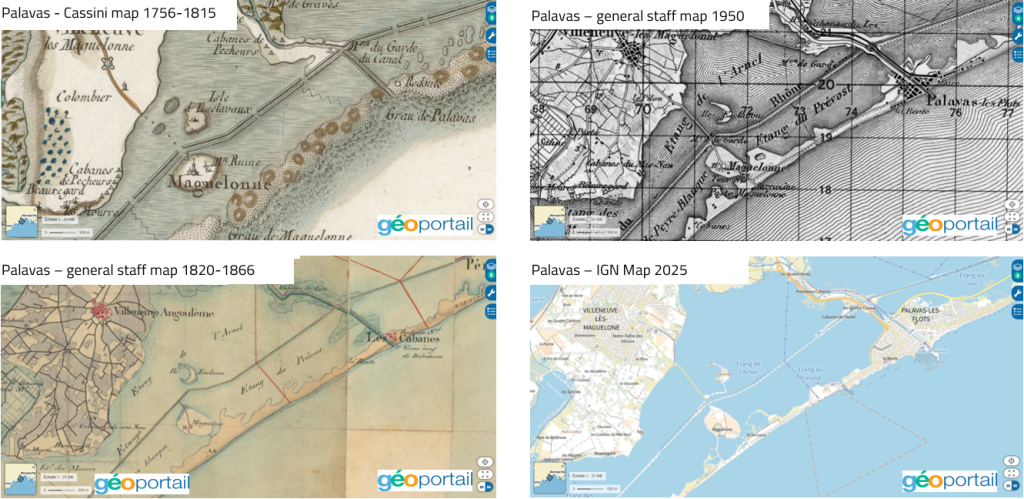
Palavas-les-flots though the age in 4 official maps ©Geoportail.
Beach Replenishment Efforts
In the 2010s, significant beach replenishment projects were undertaken using dredgers. These efforts, costing millions of euros, were intended to provide sand for several years or even decades, according to local stakeholders. However, the effects of storms quickly undermined these projections, reducing their effectiveness to less than five years.


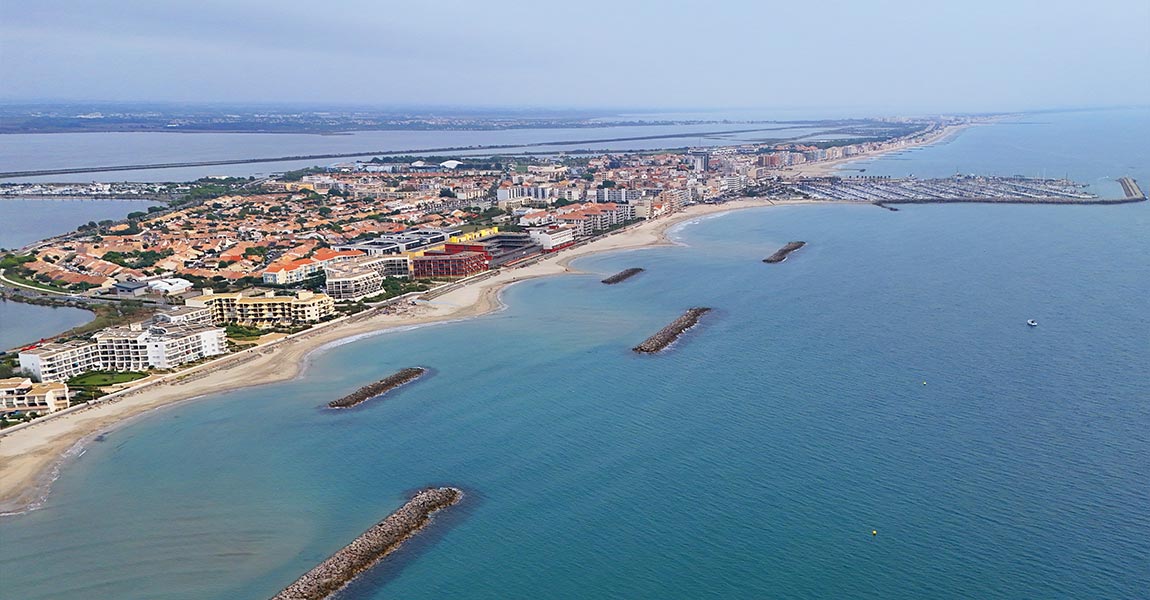
Palavas-les-flots coastline evolution from 1960 to 2024 the age in 2 aerial views ©Geoportail – IGN.
Expert Insights
Frédéric Bouchette, a professor at the University of Montpellier and a researcher at the Géosciences Montpellier laboratory specializing in coastal erosion, was interviewed by Hérault Tribun. He noted, “Overall, the Gulf of Lion is experiencing an erosive trend. The expected lifespan of the sand stock on most sites is about a decade.”
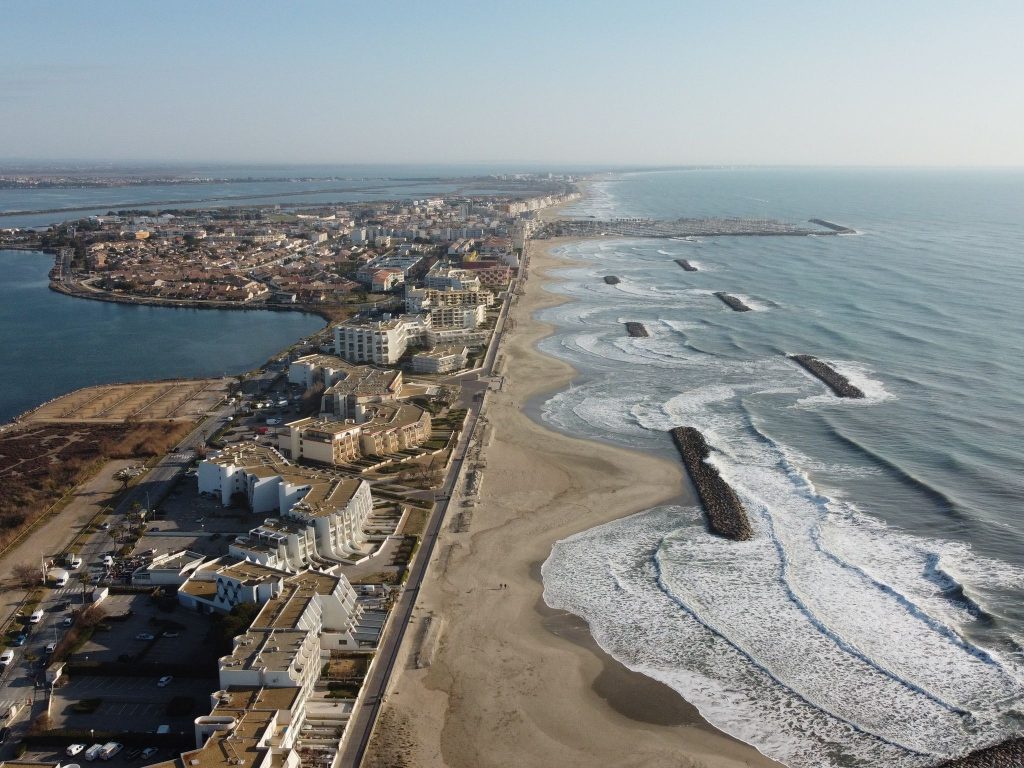
A view on Palavas-les-Flots coastline with waves ©Lineup Ocean.
Innovative Solutions: The SURFREEF Project
The Lineup Ocean team has extensively studied the processes affecting Mediterranean coasts. With the SURFREEF project, they are testing a new generation of submerged structures designed to limit coastal erosion. Inspired by the natural mechanisms of mangroves, this eco-designed innovation aims to dissipate the energy of destructive waves and promote the regeneration of sandbanks.
The UpBlock© modules, 3D-printed from a bio-based material (low-carbon shell mortar), represent a promising French advancement. They are designed to enhance a beach’s natural resilience while supporting local biodiversity.
A simulation view of the UpBlock® modules integrated to enhance a beach’s natural resilience ©Lineup Ocean
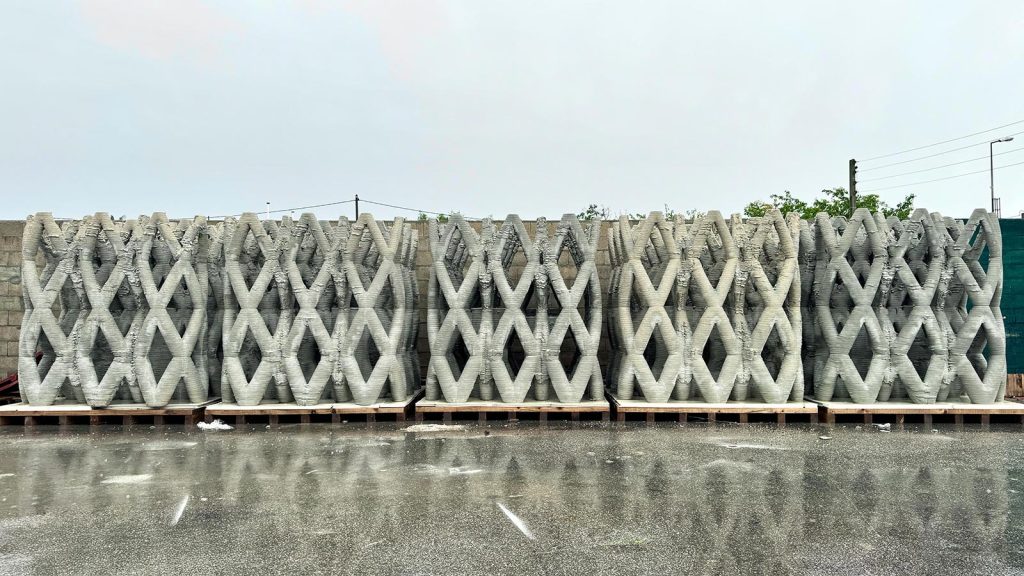
The UpBlock® modules, 3D-printed from a bio-based material
For YellowScan, the technical challenge of the SURFREEF project is both inspiring and stimulating. The team enthusiastically supported Lineup Ocean by deploying its topo-bathymetric LiDAR system, the Navigator.
Establishing a Baseline
The first phase of the project focused on creating a comprehensive baseline, integrating physical and biological indicators. Topography was a major component of this coastal project.
A Pilot Project with Scalability in Mind
SURFREEF provides Lineup Ocean with the opportunity to test the effectiveness of its UpBlock© structures in real-world conditions. These structures are designed to mitigate erosion and limit shoreline retreat in the context of climate change.
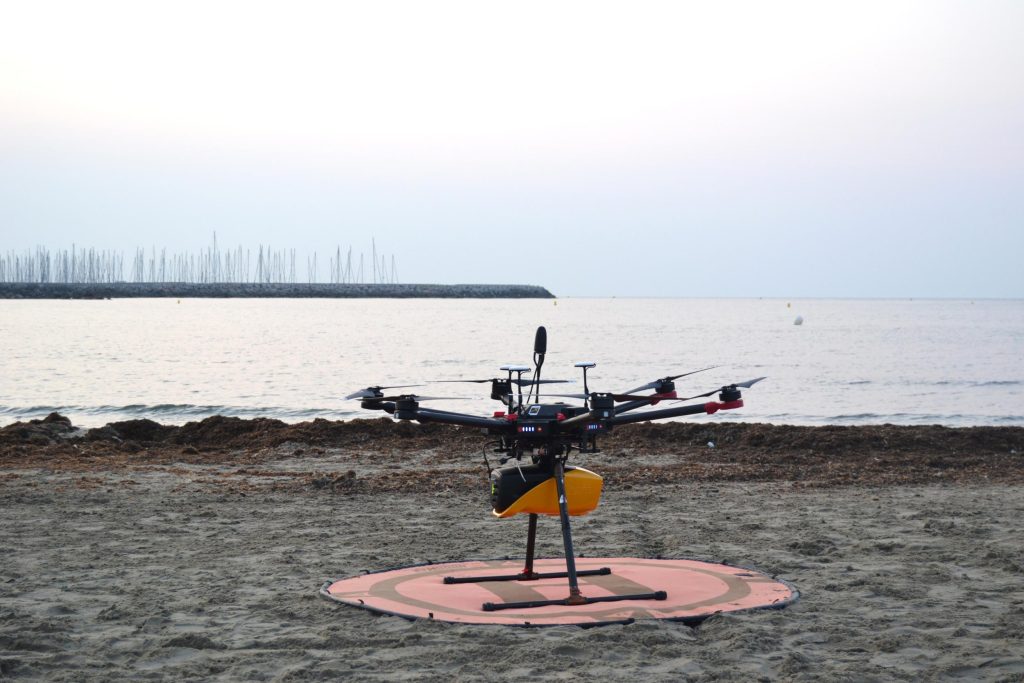
The YellowScan Navigator mounted on a DJI M600 before the mission
Deploying the YellowScan Navigator LiDAR System
As part of the baseline assessment, the Navigator system was used to model the entire beach, including breakwaters, under calm sea and clear water conditions.
A Carefully Managed Mission
The mission required adherence to numerous parameters. The Navigator system needed a drone capable of carrying a 4 kg payload. The flight scenario chosen was S1, due to the drone’s total weight. The mission utilized a DJI M600, a drone proven for bathymetric LiDAR missions.
Given the urban context and the presence of an air corridor, flight authorizations were obtained, and all legal requirements were followed. Palavas-les-Flots, a popular seaside resort near an airport, also presented logistical challenges. To minimize disruptions, the mapping was conducted at sunrise, with support from the municipal police to secure the area.
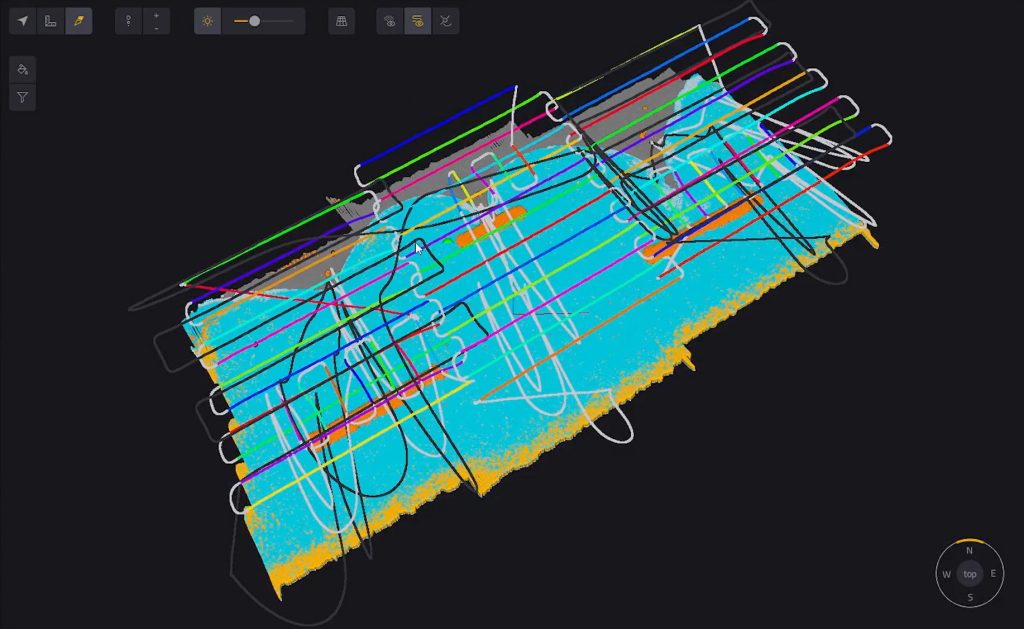
A view of the YellowScan CloudStation with the flight strips overlaid on the dataset
Flight Acquisition Parameters
Flight constraints, due to the urban environment and air corridor, required a short and precise flight plan. To create a comprehensive cartographic baseline, data density was crucial. The plan involved covering the 8-hectare experimental site in less than 20 minutes, at an altitude of 50 meters and a speed of 5 m/s. In practice, the protocol was adapted with three distinct takeoff and landing zones to maintain the maximum allowed distance between the drone and the pilot.
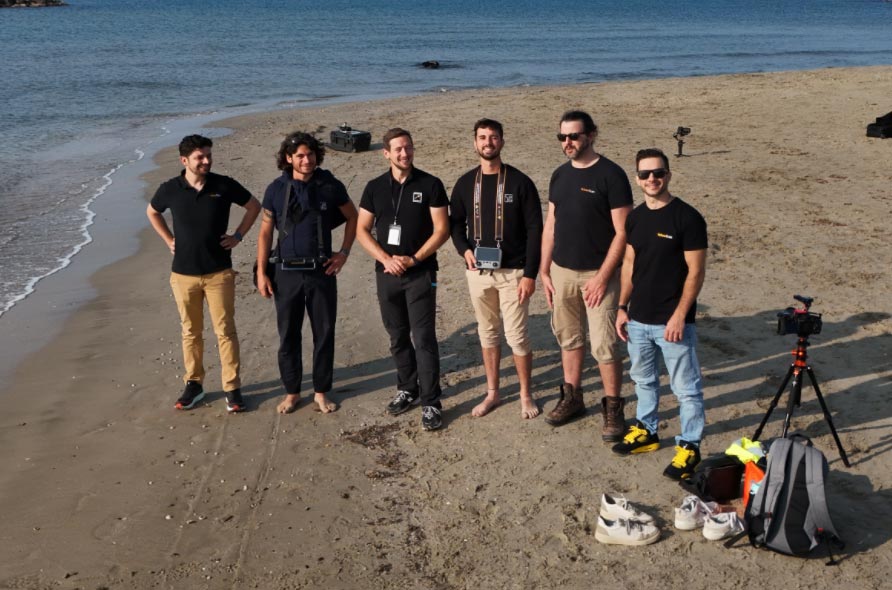
Throughout the operation, the drone pilot, LiDAR operator, and members of the Lineup Ocean and YellowScan teams ensured the smooth execution of the flights. Pedestrians, athletes, and residents were informed about the SURFREEF project and the ongoing mission.
The Lineup Ocean and YellowScan team members in the field carried out this mission
Data Processing
The point clouds generated by the Navigator were processed and classified, then cross-checked with control points (GCP) and, for the terrestrial part, with photogrammetry data. Given the innovative nature of the project and the mapped area, half a day was allocated for data processing.
The topo-bathymetric LiDAR point cloud was processed automatically using YellowScan CloudStation software. The point density underwater was at least 20 points/m². This software was used for classification and filtering to export the seabed as a Digital Terrain Model (DTM).
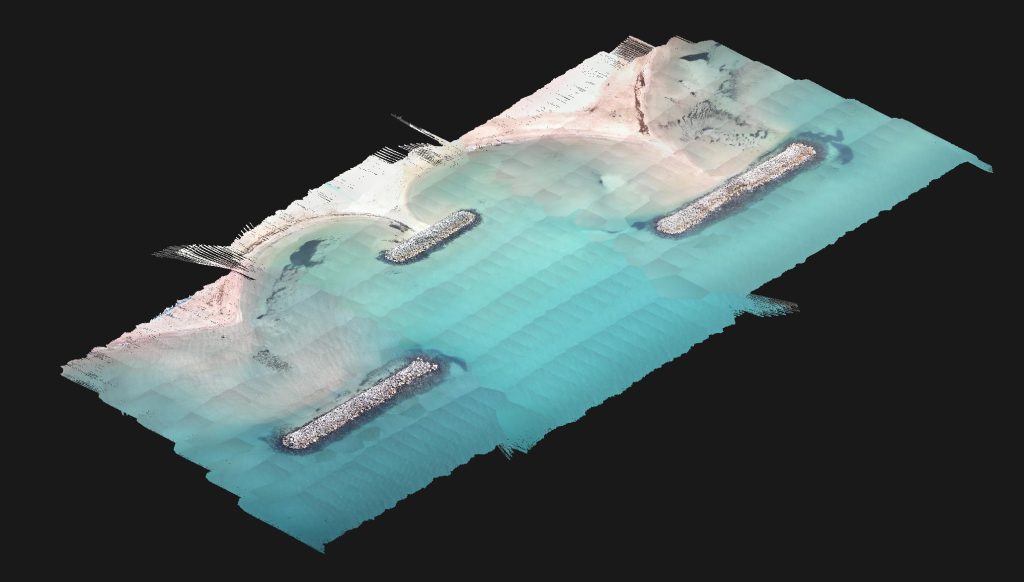
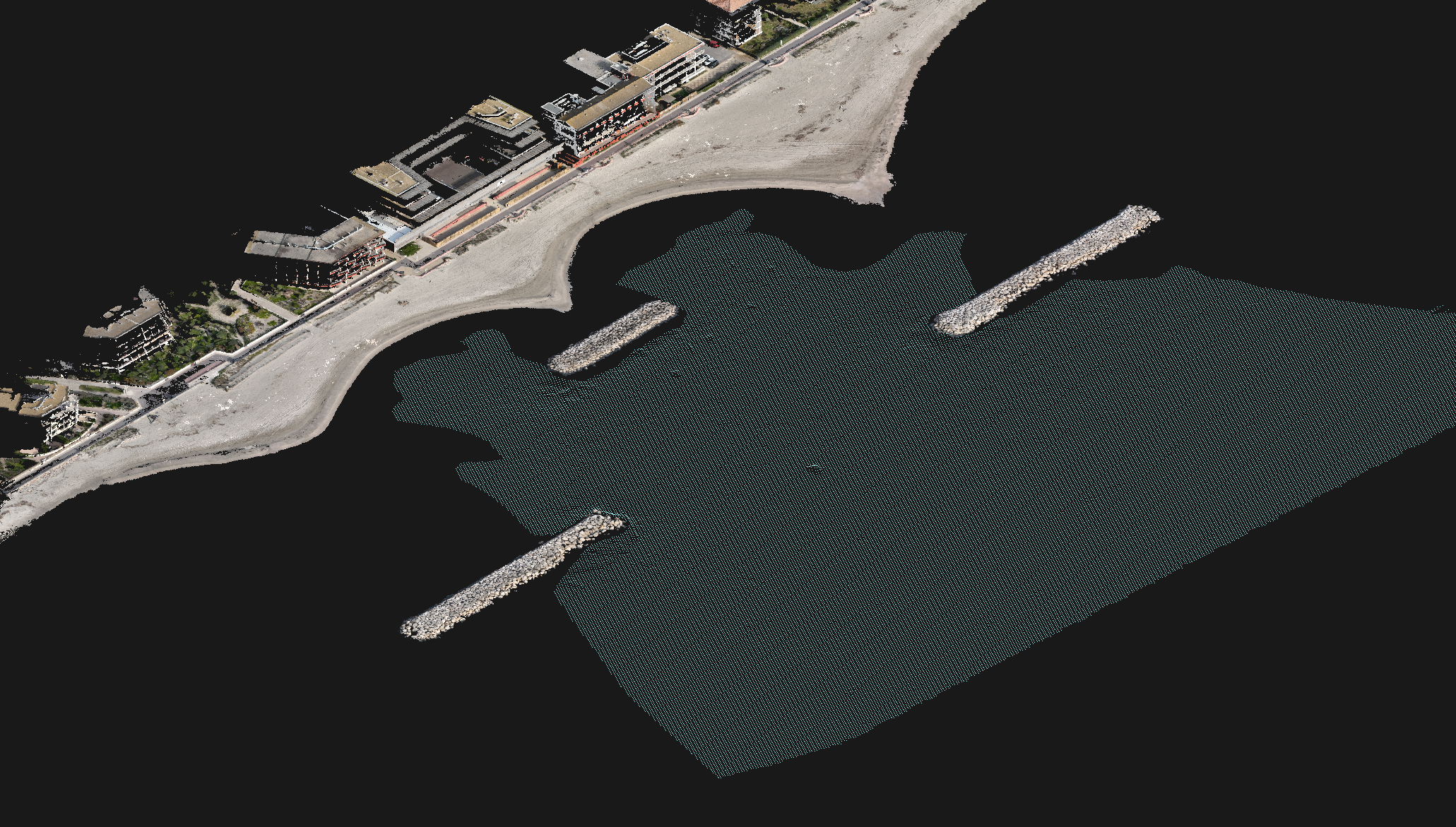
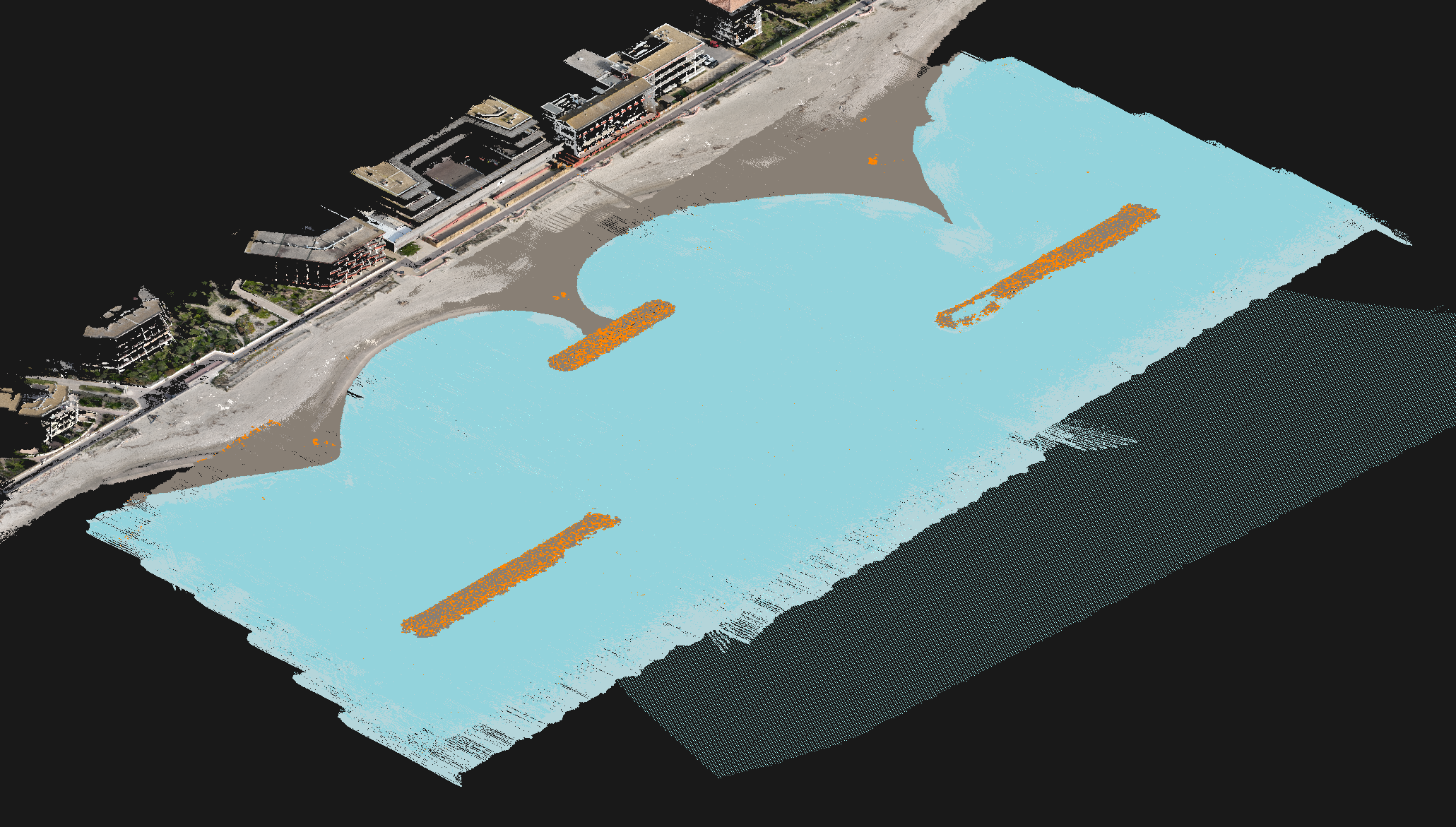
This view in CloudStation illustrates the topobathymetric dataset, which has been colorized using the RGB embedded camera
LiDAR Data Precision
Comparing LiDAR data with topographic surveys acquired using a GNSS rod (GCP) demonstrated centimeter-level accuracy. This precision is essential for detecting sandbank movements and any changes or displacements of future UpBlock© structures or existing breakwaters.
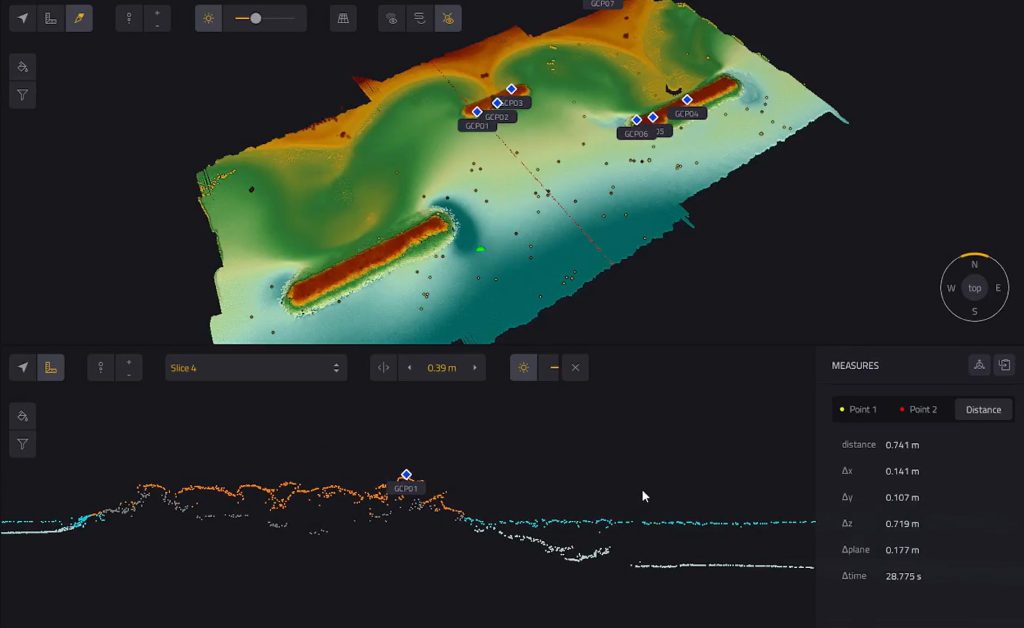
Ground Control Points and LiDAR data combined in a single dataset
Merging Photogrammetric and LiDAR Data
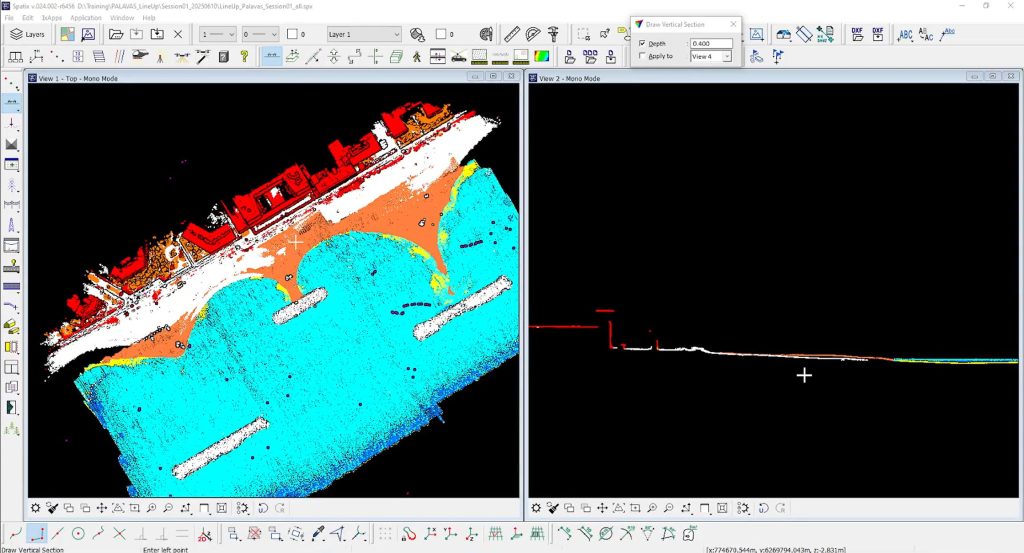
For this step, Terrasolid software was used to overlay the processed data. Lineup Ocean had conducted photogrammetric modeling in April 2025, while LiDAR acquisition took place in June 2025. The observed differences in the beach profile were attributed to seasonal changes, such as winter storms. Fixed structures and breakwaters served as reference points, showing that the beach profile had evolved between April and June. The LiDAR acquisition revealed a level drop of nearly 20 cm in some areas of the emerged beach, a phenomenon attributed to the establishment of a “summer profile” by the Lineup Ocean team.


This slider presents the initial Lineup Ocean dataset, which combines photogrammetry and echo sounder data. The final dataset is completed by topo-bathymetric LiDAR data.
Conclusions and Future Prospects
The operation in Palavas-les-Flots, combining a new methodology and a baseline assessment before development, validated the operational capability of the Navigator. This tool effectively fills gaps in bathymetric data while ensuring the continuity of topographic data with centimeter precision.
The flight protocol, approved by authorities, will serve as a reference for future operations. The next data acquisitions will occur during the installation of a demonstrator segment of UpBlock© modules and after the first storm, to measure sandbank movements on the site. YellowScan will participate in these operations as a technical partner.
This is a view in TerraScan, showing the overlay of datasets from Lineup Ocean and YellowScan, with a slice illustrating the continuous data from the building to the sea.
We extend our warm thanks to the Lineup Ocean team for their trust and openness to new technologies, as well as to the municipality of Palavas-les-Flots and the Directorate General of Civil Aviation for their support.
Ressources
- Lineup Ocean : https://landing.lineup-ocean.com/
- Pôle méditerranée : https://polemermediterranee.com/domaines-dactions-strategiques/surfreef/
- Geoportail : https://www.geoportail.gouv.fr/
- Plan littoral 21 : https://www.prefectures-regions.gouv.fr/occitanie/Region-et-institutions/L-action-de-l-Etat/Mer-et-littoral/Le-plan-littoral-212/Plan-Littoral-21/
- France 3 Occitanie : https://france3-regions.franceinfo.fr/occitanie/herault/montpellier/on-doit-trouver-des-solutions-pour-l-environnement-l-erosion-du-littoral-au-c-ur-d-un-programme-au-long-cours-3122284.html
- Hérault Tribune :
- Érosion du littoral héraultais : “Une bonne partie des plages du golfe d’Aigues-Mortes a perdu 80% de son sable” 13 mars 2025 : https://www.herault-tribune.com/articles/erosion-du-littoral-heraultais-une-bonne-partie-des-plages-du-golfe-daigues-mortes-a-perdu-80-de-son-sable/
- Avec Palavas Horizon 2050, la commune s’arme pour lutter contre l’érosion du trait de côte : https://www.herault-tribune.com/articles/avec-palavas-horizon-2050-la-commune-sarme-pour-lutter-contre-lerosion-du-trait-de-cote/
- Reportage France 3, L’érosion du littoral, Diffusé le 27 juin 2015 : https://fresques.ina.fr/rivages-heraultais/fiche-media/HERAUL00099/l-erosion-du-littoral.html